Ever stumbled through a dark room, fumbling for that tiny, elusive lamp switch? Or perhaps you’ve settled onto the couch, perfectly cozy, only to realize you left the harsh overhead light on instead of the gentle reading lamp. If you’re ready to solve these little daily annoyances, it’s time to buy a smart plug for lamps. This simple, affordable gadget is a game-changer, instantly upgrading your favorite traditional lamps into smart, responsive lighting.
This guide is your one-stop shop for everything you need to know. We’ll walk you through what to look for, how to set them up, and unlock some clever tricks that will make you wonder how you ever lived without them. Let’s get started on making your home a little bit smarter, one lamp at a time.
Why Even Bother with a Smart Plug for Your Lamps?
That’s a fair question. Your lamps work just fine, right? But the magic isn’t just about turning them on and off. It’s about adding layers of convenience, security, and even a bit of fun to your daily routine.
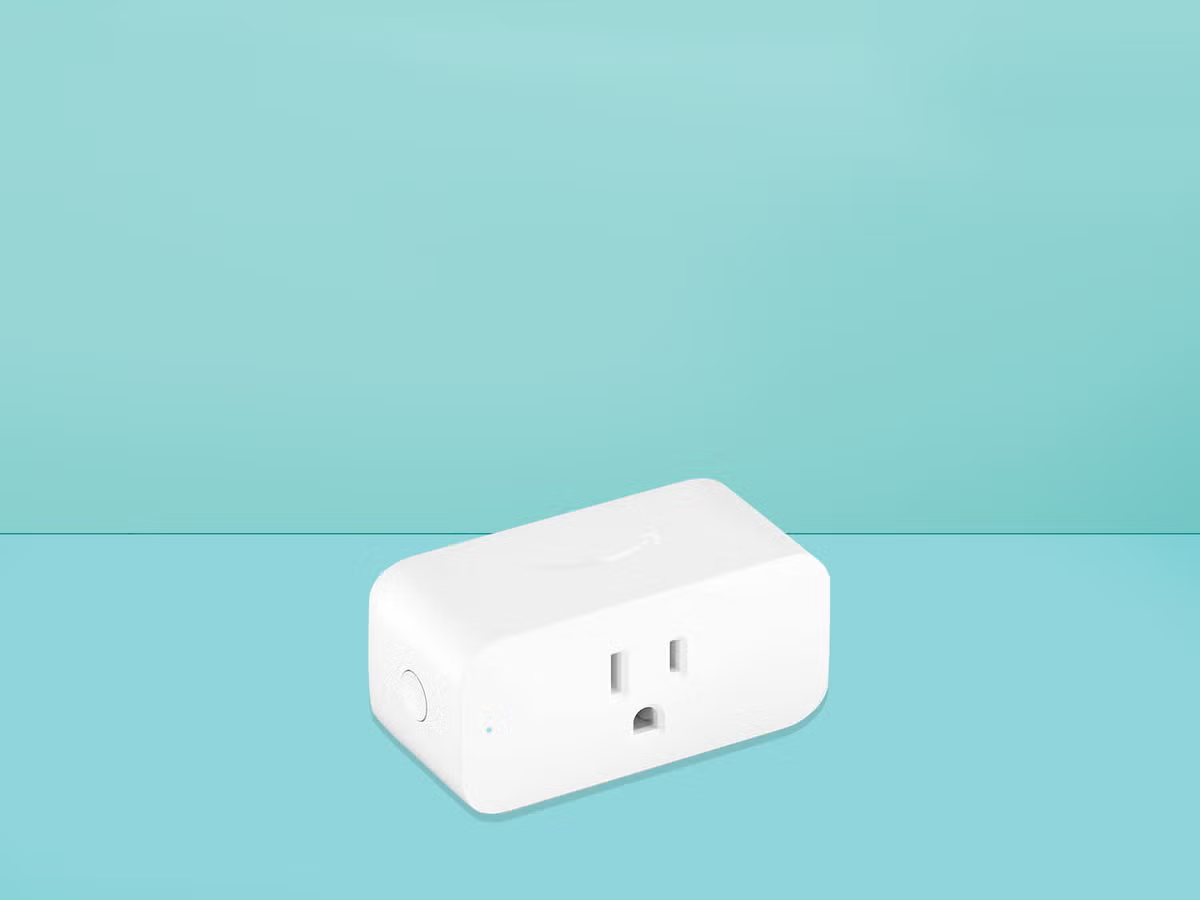
A smart plug is essentially an adapter that fits between your lamp’s cord and the wall outlet. It connects to your home’s Wi-Fi network, allowing you to control the flow of electricity to your lamp using your smartphone or your voice.
As our in-house tech specialist, David Chen, often says, “A smart plug is the simplest, most accessible entry point into home automation. It doesn’t require any wiring or complex installation, yet it delivers an immediate and tangible benefit to your everyday life.”
Here’s a quick rundown of the perks:
- Voice Control: “Hey Google, turn on the living room lamp.” It’s that easy. No more fumbling in the dark.
- Remote Access: Left the house in a hurry and can’t remember if you turned off the lights? Just open an app on your phone and check. You can control your lamps from anywhere with an internet connection.
- Scheduling and Routines: Have your bedside lamp gently turn on to help you wake up in the morning. Set your living room lights to turn on automatically at sunset, creating a warm, welcoming home to return to.
- Enhanced Security: With “Away Mode” on many smart plugs, your lamps will turn on and off randomly, making it look like someone’s home even when you’re on vacation.
Key Features to Consider When You Buy a Smart Plug for Lamps
Not all smart plugs are created equal. When you’re ready to buy a smart plug for lamps, focusing on a few key features will ensure you get the perfect device for your needs.
1. Voice Assistant Compatibility
This is hands down one of the most important features. Make sure the plug you choose is compatible with your preferred smart home ecosystem. The big three are:
- Amazon Alexa: Works with Echo devices.
- Google Assistant: Works with Google Nest and Android devices.
- Apple HomeKit: Works with Siri and Apple devices.
Most plugs today support both Alexa and Google Assistant, but HomeKit compatibility can sometimes be a bit more exclusive, so always double-check the product description.
2. Size and Design
This might seem trivial, but it’s a practical consideration. Some older, bulkier smart plugs are so wide they block the second outlet on a standard wall plate. Look for a compact, circular, or rectangular design that promises not to obstruct its neighbor. You’ll thank yourself later when you need to plug in the vacuum cleaner.
3. Connectivity: Wi-Fi, Bluetooth, or Something Else?
How your plug talks to your network matters.
- Wi-Fi: This is the most common and straightforward type. It connects directly to your home’s Wi-Fi router, no extra hardware needed. It’s perfect for beginners.
- Bluetooth: Less common for standalone plugs, but some use it for initial setup. It has a shorter range and isn’t ideal for controlling your lamps when you’re away from home.
- Zigbee/Z-Wave/Matter: These protocols require a separate smart home hub (like an Amazon Echo with a built-in hub, or a dedicated Hubitat or SmartThings hub). The benefit? They create a dedicated “mesh” network for your smart devices, which can be more reliable and faster than a crowded Wi-Fi network. Matter is the new universal standard aiming to make all devices work together, so buying a Matter-compatible plug is a great way to future-proof your setup.
For most people just starting out, a simple Wi-Fi plug is the best choice.
4. Energy Monitoring
Want to know exactly how much electricity that old incandescent reading lamp is using? Some smart plugs come with built-in energy monitoring. They track power consumption in real-time and provide historical data through their app. This is a fantastic feature for anyone looking to identify energy hogs and reduce their electricity bill.
A Simple Guide to Setting Up Your First Smart Plug
You’ve done your research and are ready to buy a smart plug for lamps. The good news is that the setup process is incredibly simple and usually takes less than five minutes.
- Download the App: Find the manufacturer’s app on the Apple App Store or Google Play Store. This could be the Kasa app for TP-Link, the Smart Life app for many generic brands, or the brand’s own dedicated app. Create an account.
- Plug It In: Plug the smart plug into a wall outlet. A small light on the plug will usually start blinking, indicating it’s in pairing mode.
- Connect to Wi-Fi: Open the app and follow the on-screen instructions to add a new device. You’ll typically select “smart plug” from a list, and the app will guide you to connect it to your 2.4GHz Wi-Fi network. Note: Most smart plugs do not work with 5GHz Wi-Fi networks, so make sure your phone is connected to the 2.4GHz band during setup.
- Name Your Device: Give your plug a clear, simple name. Instead of “Smart Plug 2,” name it “Living Room Lamp” or “Bedside Light.” This makes voice commands much more intuitive.
- Connect to Your Voice Assistant: Open your Amazon Alexa or Google Home app. Go to the “Skills” (Alexa) or “Works with Google” (Google) section, search for the smart plug’s brand, and link your accounts. Once linked, your voice assistant will discover the newly named plug, and you’re ready to go!
|
Our Picks for the Best Smart Plug in 2026
As an Amazon Associate, we earn from qualifying purchases.
|
||
| Num | Product | Action |
|---|---|---|
| 1 | Kasa Smart Plug HS103P2, Smart Home Wi-Fi Outlet Works with Alexa, Echo, Google Home & IFTTT, No Hub Required, Remote Control,15 Amp,UL Certified, (Pack of 2) White |

|
| 2 | Amazon Basics Smart Plug, Works with Alexa Only, 2.4 GHz Wi-Fi, No Hub Required, 4-Pack, White |
|
| 3 | Kasa Smart Plug HS103P4, Smart Home Wi-Fi Outlet Works with Alexa, Echo, Google Home & IFTTT, No Hub Required, Remote Control, 15 Amp, UL Certified, 4-Pack, White |
|
| 4 | Kasa Smart Plug Mini 15A, Apple HomeKit Supported, Smart Outlet Works with Siri, Alexa & Google Home, UL Certified, App Control, Scheduling, Timer, 2.4G WiFi Only, 4 Count (Pack of 1) (EP25P4), White |
|
| 5 | Govee Smart Plug, WiFi Plugs Work with Alexa & Google Assistant, Smart Outlet with Timer & Group Controller, WiFi Outlet for Home, No Hub Required, ETL & FCC Certified, 2.4G WiFi Only, 4 Pack |
|
| 6 | TP-Link Tapo Matter Supported Smart Plug Mini, Compact Design, 15A/1800W Max, Super Easy Setup, Works with Apple Home, Alexa & Google Home, UL Certified, 2.4G Wi-Fi Only, White, Tapo P125M(3-Pack) |
|
| 7 | Kasa Smart Plug Ultra Mini 15A, Smart Home Wi-Fi Outlet Works with Alexa, Google Home & IFTTT, No Hub Required, UL Certified, 2.4G WiFi Only, 2 Count (Pack of 1)(EP10P2) , White |
|
| 8 | Kasa Smart Plug Mini 15A, Smart Home Wi-Fi Outlet Works with Alexa, Google Home & IFTTT, No Hub Required, UL Certified, 2.4G WiFi Only, 4-Pack(EP10P4) , White |
|
| 9 | Amazon Basics Smart Plug, Works with Alexa Only, 2.4 GHz Wi-Fi, No Hub Required, 2 Pack, White |
|
| 10 | Govee Smart Plug, WiFi Plugs Work with Alexa & Google Assistant, Smart Outlet with Timer & Group Controller, WiFi Outlet for Home, No Hub Required, ETL & FCC Certified, 2.4G WiFi Only, 2 Pack |
|
Unleash Your Creativity: Beyond On and Off
Once you’ve mastered the basics, you can start having some real fun. Here are a few creative ideas to get you started:
- “Good Morning” Routine: Link your smart plug to a morning routine in your Alexa or Google Home app. When you say “Good morning,” your bedside lamp can fade on, your smart speaker can start playing the news, and your smart coffee maker can start brewing.
- “Movie Night” Scene: Create a scene that dims or turns off main room lights while turning on softer accent lamps, all with a single voice command.
- Gentle Reminder: Are the kids always forgetting to turn off the lamp in their playroom? Set a schedule for it to automatically turn off at 9 PM every night.
- Holiday Lighting: Connect your holiday lights to a smart plug for effortless scheduling and control. No more crawling behind the tree to plug them in and out.
Your Checklist Before You Buy a Smart Plug for Lamps
To make things easy, here’s a quick checklist to run through before you make your purchase.
- [ ] Ecosystem Compatibility: Does it work with Alexa, Google Assistant, or Apple HomeKit?
- [ ] Hub Required? Is it a simple Wi-Fi plug, or does it need a Zigbee/Z-Wave/Matter hub?
- [ ] Size and Shape: Will it block my other outlet?
- [ ] App Quality: Check the app’s reviews. Is it user-friendly and reliable?
- [ ] Extra Features: Do I want energy monitoring or an “Away Mode”?
- [ ] Safety Certification: Look for certifications like UL or ETL to ensure it meets safety standards.
Frequently Asked Questions (FAQ)
Q1: Can I use a smart plug with any type of lamp?
Yes, you can use a smart plug with virtually any lamp that has a physical on/off switch. For it to work, you must leave the lamp’s own switch in the “on” position, and then use the smart plug to control the power flow to it.
Q2: Will a smart plug allow me to dim my lamp?
No, a standard smart plug only controls the power (on or off). It cannot dim a lamp. For dimming capabilities, you would need to use a smart bulb or a specialized, more expensive smart dimmer plug that is specifically designed for use with dimmable bulbs.
Q3: Do I need a smart home hub to buy a smart plug for lamps?
For most smart plugs on the market today, you do not need a hub. The majority connect directly to your home’s Wi-Fi network. However, plugs that use protocols like Zigbee, Z-Wave, or Thread will require a compatible hub to function.
Q4: What happens if my internet connection goes down?
If your Wi-Fi goes out, you will lose remote and voice control of the smart plug. However, almost all smart plugs have a physical button on the side that you can press to manually turn your lamp on or off, so it will still function like a regular outlet switch.
Q5: Do smart plugs use a lot of electricity when the lamp is off?
No, their standby power consumption is extremely low. A typical smart plug uses less than 1 watt of power when idle. This equates to a negligible cost on your electricity bill, usually just a dollar or two over an entire year.
Your First Step into a Smarter Home
Turning a simple lamp into a smart device is an incredibly satisfying and practical upgrade. It saves you steps, adds a layer of modern convenience to your home, and can even help you save a little on your energy bill. With the knowledge from this guide, you now have all the tools you need to confidently buy a smart plug for lamps that perfectly fits your home and lifestyle. It’s a small investment that delivers a big return in daily convenience, paving the way for your smart home journey.