Let’s be honest, we all do it. You turn off your TV with the remote, see the little red standby light, and think it’s completely off. But here’s a little secret: it’s not. That tiny light is a sign of a bigger problem—vampire power drain. This is where a Smart Plug For TVs enters the picture, and trust me, it’s a game-changer. It’s not just about turning your TV on and off with your voice; it’s about saving money, gaining convenience, and making your entertainment setup genuinely smarter. This guide will walk you through everything you need to know, transforming you from a curious bystander into a smart home pro.
What Exactly Is a Smart Plug for a TV, Anyway?
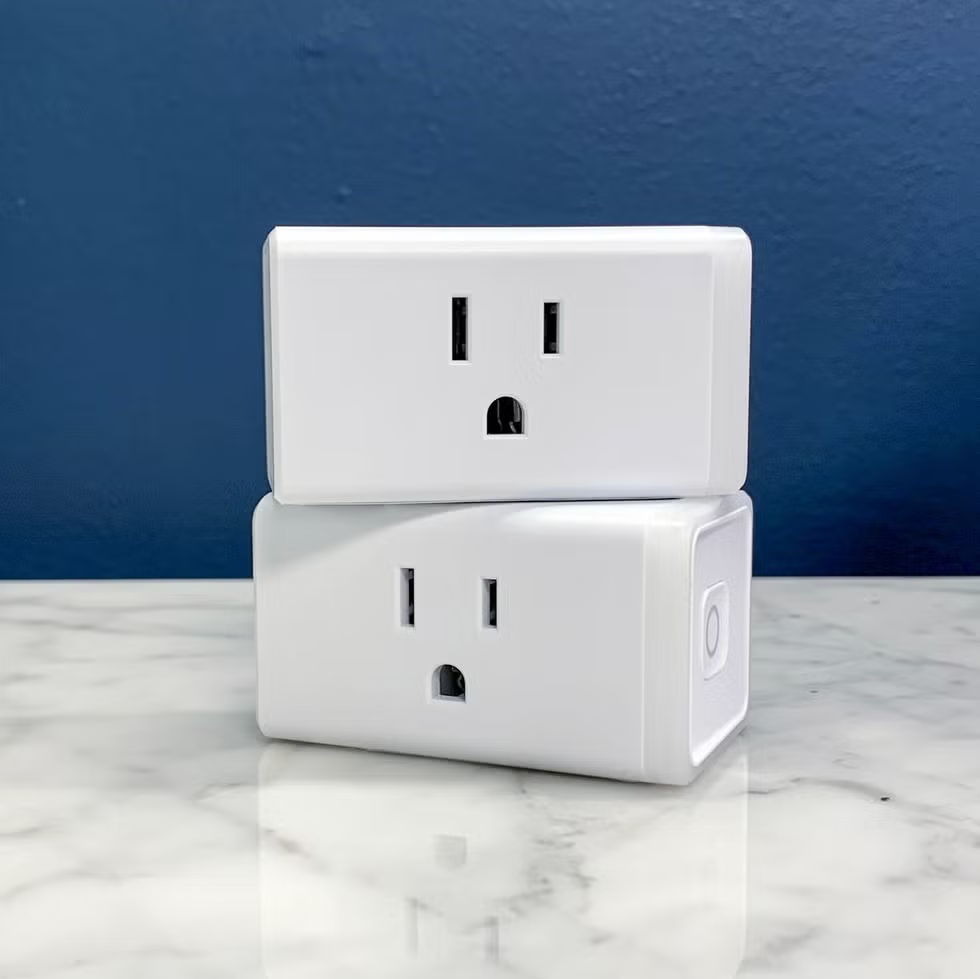
At its core, a smart plug for TVs is a simple adapter that sits between your TV’s power cord and the wall outlet. But inside that small device is a world of technology. It connects to your home’s Wi-Fi network, allowing you to control the power flow to your television remotely using a smartphone app, or even better, with voice commands through assistants like Alexa, Google Assistant, or Siri.
Think of it as a remote control for your power outlet. Instead of just cutting the power when you flick a switch, you’re giving it a brain. This “brain” allows you to set schedules, create timers, and integrate your TV into a larger smart home ecosystem. It’s the first, and arguably one of the most impactful, steps you can take into home automation.
The Key Benefits: More Than Just Turning It On and Off
You might be thinking, “My remote already turns my TV on and off. Why bother?” That’s a fair question. But the benefits of using a smart plug for TVs go far beyond that simple function.
Slash Your Energy Bills by Slaying Vampire Power
Vampire power, also known as standby power or phantom load, is the energy consumed by electronics when they are turned off but still plugged in. Your TV is one of the biggest culprits. While that little red light seems harmless, it and the internal components waiting for a remote signal can add up significantly over a year.
According to energy experts, standby power can account for up to 10% of a household’s annual electricity usage. A smart plug completely cuts the power to the device, eliminating this wasteful drain entirely.
By setting a schedule to completely power down your TV and its associated accessories (like a soundbar or gaming console, which you can plug into a smart power strip) overnight, you’re guaranteeing they use zero electricity. It’s an effortless way to be more eco-friendly and save real money on your utility bills.
Unlock Ultimate Convenience with Voice Control and Automation
Picture this: you’re settled on the couch with popcorn, ready for a movie, but the remote is hiding somewhere in the cushions. Instead of a frantic search, you simply say, “Hey Google, turn on the TV.” That’s the magic of a smart plug.
But it gets even better with routines:
- “Good Morning” Routine: As your smart speaker tells you the weather, it can automatically turn on the TV to your favorite morning news channel.
- “Movie Night” Scene: A single command like “Alexa, it’s movie time” can dim your smart lights, turn on the TV and soundbar, and get your entertainment center ready for action.
- “Goodnight” Routine: Say the word, and your smart plug will power down the entire TV setup, ensuring no energy is wasted while you sleep.
Enhanced Safety and Peace of Mind
Ever leave the house and have that nagging feeling you left the TV on? With a smart plug, you can check its status and turn it off from anywhere in the world using your smartphone. This is fantastic for peace of mind.
Furthermore, it’s a brilliant tool for parental controls. You can set schedules to automatically turn off the TV during homework hours or after bedtime, putting an end to those late-night cartoon or gaming sessions without any arguments.
|
Our Picks for the Best Smart Plug in 2026
As an Amazon Associate, we earn from qualifying purchases.
|
||
| Num | Product | Action |
|---|---|---|
| 1 | Govee Smart Plug, WiFi Plugs Work with Alexa & Google Assistant, Smart Outlet with Timer & Group Controller, WiFi Outlet for Home, No Hub Required, ETL & FCC Certified, 2.4G WiFi Only, 4 Pack |

|
| 2 | Kasa Smart Plug HS103P2, Smart Home Wi-Fi Outlet Works with Alexa, Echo, Google Home & IFTTT, No Hub Required, Remote Control,15 Amp,UL Certified, (Pack of 2) White |
|
| 3 | Kasa Smart Plug Mini 15A, Apple HomeKit Supported, Smart Outlet Works with Siri, Alexa & Google Home, UL Certified, App Control, Scheduling, Timer, 2.4G WiFi Only, 4 Count (Pack of 1) (EP25P4), White |
|
| 4 | Kasa Smart Plug Ultra Mini 15A, Smart Home Wi-Fi Outlet Works with Alexa, Google Home & IFTTT, No Hub Required, UL Certified, 2.4G WiFi Only, 2 Count (Pack of 1)(EP10P2) , White |
|
| 5 | Amazon Basics Smart Plug, Works with Alexa Only, 2.4 GHz Wi-Fi, No Hub Required, 2 Pack, White |
|
| 6 | TP-Link Tapo Matter Supported Smart Plug Mini, Compact Design, 15A/1800W Max, Super Easy Setup, Works with Apple Home, Alexa & Google Home, UL Certified, 2.4G Wi-Fi Only, White, Tapo P125M(3-Pack) |
|
| 7 | Kasa Smart Plug HS103P4, Smart Home Wi-Fi Outlet Works with Alexa, Echo, Google Home & IFTTT, No Hub Required, Remote Control, 15 Amp, UL Certified, 4-Pack, White |
|
| 8 | Govee Smart Plug, WiFi Plugs Work with Alexa & Google Assistant, Smart Outlet with Timer & Group Controller, WiFi Outlet for Home, No Hub Required, ETL & FCC Certified, 2.4G WiFi Only, 2 Pack |
|
| 9 | Amazon Basics Smart Plug, Works with Alexa Only, 2.4 GHz Wi-Fi, No Hub Required, 4-Pack, White |
|
| 10 | Kasa Smart Plug Mini 15A, Smart Home Wi-Fi Outlet Works with Alexa, Google Home & IFTTT, No Hub Required, UL Certified, 2.4G WiFi Only, 4-Pack(EP10P4) , White |
|
How Do I Set Up a Smart Plug for My TV?
You don’t need to be a tech wizard to get this working. In fact, it’s usually a five-minute job. I recently set one up for my parents, and the process was so simple they were creating their own voice commands by the end of the day.
Here’s the typical step-by-step process:
- Unbox and Plug It In: Take the smart plug out of the box and plug it into the wall outlet you want to use for your TV. A light on the plug will usually start blinking, indicating it’s in pairing mode.
- Download the App: Scan the QR code in the manual or search for the manufacturer’s app on your phone’s app store (e.g., Kasa Smart, Wyze, TP-Link Tapo).
- Create an Account: Open the app and follow the prompts to create a new account.
- Add Your Device: Tap the ‘Add Device’ or ‘+’ button in the app. It will then search for your new smart plug.
- Connect to Wi-Fi: Select your home Wi-Fi network from the list and enter the password. This is how the plug connects to the internet. Pro-tip: Make sure your phone is connected to a 2.4GHz Wi-Fi network during setup, as most smart plugs don’t work with 5GHz networks for the initial pairing.
- Name Your Plug: Give it a clear, easy-to-remember name like “Living Room TV” or “Main TV.” This is the name you’ll use for voice commands.
- Plug in Your TV: Now, plug your TV’s power cord into the smart plug. That’s it! You can now control your TV’s power from the app.
Integrating Your Smart Plug into a Larger Ecosystem
The real power of a smart plug for TVs is unleashed when you connect it to a smart home hub like Amazon Alexa, Google Assistant, or Apple HomeKit. This is what enables voice control and sophisticated routines.
How to Connect to Alexa or Google Assistant
The process is remarkably similar for both platforms and is usually done through their respective apps.
- In the Alexa or Google Home app, you’ll look for the option to ‘Add a Device’ or ‘Set up device.’
- You’ll then choose to link a new service and search for the brand of your smart plug (e.g., Kasa, Wyze).
- The app will prompt you to log in with the account you created earlier for the smart plug’s app.
- Once linked, the assistant will discover your plug, and you can start using voice commands like, “Alexa, turn off the Living Room TV.”
Expert Insight from Dr. Alistair Finch, a leading smart home integration specialist:
“The beauty of devices like smart plugs lies in their interoperability. They are the fundamental building blocks of a truly connected home. With the rise of standards like Matter, we’re moving towards a future where a smart plug purchased today will seamlessly work with the smart home systems of tomorrow, making it a wise and future-proof investment for any homeowner.”
What to Look for When Choosing a Smart Plug for a TV
Not all smart plugs are created equal. Since a TV, especially a large one with a sound system, can draw a significant amount of power, you need to choose the right tool for the job.
Here’s a quick checklist:
- Power Rating: Ensure the plug is rated to handle the wattage of your TV and any other devices you might plug into it. Most are rated for 10-15 amps, which is more than enough for almost any TV, but it’s always good to check.
- Form Factor: Will the plug’s design block the other outlet? Look for compact or offset designs if you’re tight on space.
- Ecosystem Compatibility: Double-check that it works with your preferred voice assistant (Alexa, Google Assistant, Apple HomeKit). Most support the first two, but HomeKit compatibility can be more selective.
- Energy Monitoring: Some premium smart plugs offer energy monitoring features within their app. This is a fantastic feature for tracking exactly how much power your TV setup is using and seeing your savings in real-time.
- Connectivity: The vast majority use Wi-Fi, which is perfect for most homes. You won’t need a separate hub. However, if you have a large smart home setup, you might also see plugs that use Zigbee or Z-Wave, which do require a hub but can create a more robust mesh network.
Frequently Asked Questions
Q: Will using a smart plug damage my TV?
A: No, a smart plug will not damage your TV. It functions just like unplugging the TV from the wall. Modern televisions are designed to handle sudden power cuts without any issue. It’s perfectly safe.
Q: Can I still use my regular TV remote?
A: Yes, but with one small catch. When the smart plug is on, your TV will be in its normal standby mode, and your remote will work as usual. When the smart plug is off, the TV has no power, so the remote won’t work until you turn the smart plug back on with your voice or app.
Q: How much power does the smart plug itself use?
A: An excellent question! A smart plug uses a tiny amount of energy to stay connected to your Wi-Fi network, typically less than 1 watt. The energy savings from cutting off your TV’s standby power will far outweigh the minuscule consumption of the plug itself.
Q: Do I need a special kind of smart plug for a 4K or 8K TV?
A: No, the resolution of the TV doesn’t matter. What matters is the power consumption (wattage). Large, high-end TVs can draw more power, so just ensure your chosen plug has a sufficient amperage rating (15A is a safe bet for any consumer TV setup).
Q: What happens if my internet goes down?
A: If your Wi-Fi is down, you won’t be able to control the smart plug remotely via the app or voice commands. However, most smart plugs have a physical power button on the side, so you can always turn it on or off manually.
Your First Step to a Smarter Home
Adopting a smart plug for TVs is more than just a cool tech gimmick. It’s a practical, affordable, and powerful step toward a more efficient, convenient, and secure home. It saves you money, simplifies your daily routines, and gives you a level of control you never thought possible. So, take a look at that little red standby light on your TV and decide if you’re ready to put it out for good. Your wallet, and the planet, will thank you.